
The Spa
The Quiet Clinic
The American medical-spa market has passed 10,000 locations. Its next chapter will be decided not by décor, but by repeat relationships, clinical governance, and whether growth can preserve trust.
By The Aesthetic Editorial Desk
Staff report · Published September 26, 2026 · 8 min read
Editorial note: This feature is an independent synthesis of the cited industry research. It is not medical advice.
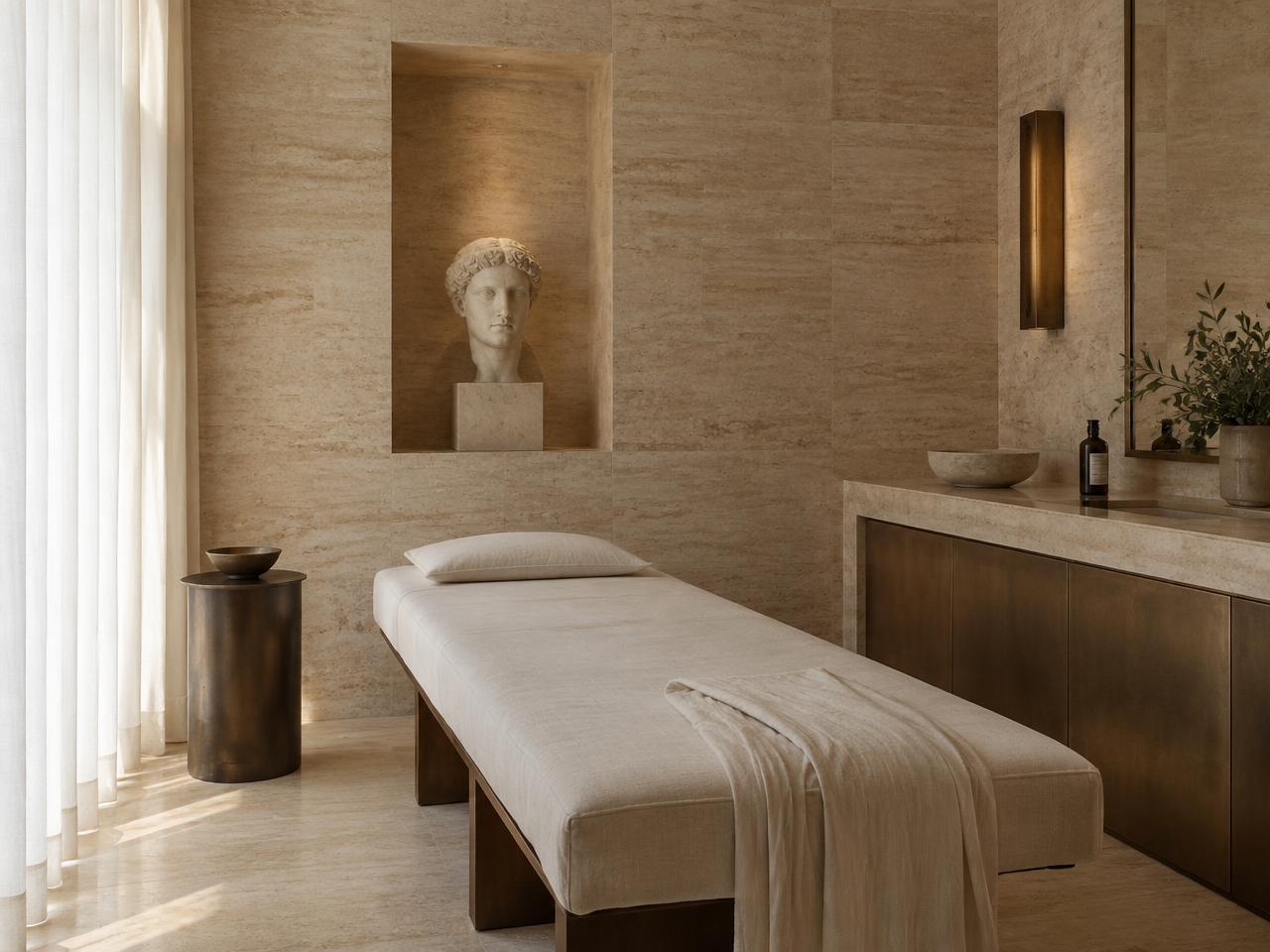
The new medical spa often announces itself through what it removes: crowded product shelves, promotional posters, an overlong treatment menu. The room may resemble a private gallery, but the calm is doing commercial work. It slows the encounter, elevates the consultation, and signals that the business intends to be a relationship rather than a transaction.
The market has grown large enough for that distinction to matter. The American Med Spa Association counted 10,488 U.S. medical spas in 2023, up from 8,899 in 2022. Its 2024 industry report estimated average annual revenue at nearly $1.4 million and said 73 percent of patients were repeat patients. Those figures come from an association survey weighted toward its own members, but they point to the central economics of the category: retention, not novelty, sustains the modern practice.
Memberships are one expression of that shift. A recurring plan can smooth revenue and encourage continuity, but its value depends on what it contains. Priority scheduling and planned maintenance are different propositions from prepaid treatments that may not remain appropriate. Clear cancellation terms, expiration rules, and clinical discretion are as important as the monthly price.
“A serene room can establish mood. Only sound clinical systems can establish trust.”
The visible refinement of the category has also raised the stakes behind the treatment-room door. Medical-spa requirements vary by state and by procedure. Titles, ownership structures, delegation rules, supervision, and scope of practice cannot be inferred from a polished website. A medical director in name only is not the same as active clinical governance.
Serious operators increasingly treat consent, photography, charting, emergency preparation, infection control, and adverse-event escalation as core brand systems. They are not glamorous, but they determine whether a multi-location concept can reproduce quality rather than merely reproduce interiors.
Consumers have become more practiced, too. They compare credentials, inspect before-and-after photography, read reviews, and arrive with vocabulary gathered online. That fluency can improve a consultation, but it can also create misplaced certainty. A responsible practice explains what a device or injectable can and cannot do for the person in the room.
The quiet clinic, then, is not defined by travertine or a neutral palette. Its real luxury is legibility: who is treating the patient, under whose authority, with what plan, and what happens if the result does not follow the script. Design may open the door. Systems decide whether the patient returns.
Sources & methodology
- 12024 Medical Spa State of the Industry Executive Summary
American Med Spa Association · November 6, 2024
U.S. association survey; 71 percent of respondents were AmSpa members.
- 2Med Spas and IV Hydration Clinics — Patient Safety Resources
Federation of State Medical Boards · Current guidance
Regulation and scope of practice vary by state.
Reporting was reviewed against the linked source material. Association statistics are attributed and should be read within the limits of their stated survey methods.
Next in Wellness
Ritual Over Routine
Read the story